Built by the Weather: How Oregon's Outdoors Forges Athletes the Rest of the Country Can't Train
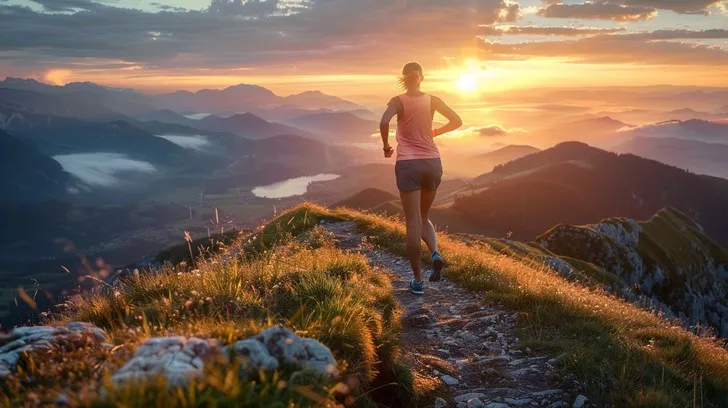
Photo: young athlete trail running sunrise mountain Oregon landscape, via images.stockcake.com
The alarm goes off at 5:40 in Bend and a seventeen-year-old is on the mountain by 7, riding first chair before school. That same kid might be in the pool by 3:30, on a trail run by 6, and asleep by 9:30 with a wet suit hanging in the shower. Nobody in this scenario considers themselves remarkable. That's the most Oregon thing about it.
The Shoulder Season Athlete
Most of the country organizes youth sports around seasons — football fall, hoops winter, baseball spring. Oregon's geography never got that memo. Here, the seasons overlap in ways that force kids to stack disciplines: a ski morning and a soccer match on the same Saturday, a river swim between track practices, a mountain bike ride as the cool-down.
The result is a specific kind of athlete — not necessarily the most specialized, but arguably the most adaptable. Coaches at the college level have started noticing it, anecdotally at first and now in recruiting conversations. The Oregon kid arrives with an unusual base: aerobic engine from years of hills, balance from board sports, cold-water tolerance that's hard to fake, and — maybe most valuable — an appetite for discomfort that comes from doing everything outside in a state where outside is moody.
What the Science-ish Crowd Says
Nobody's publishing peer-reviewed studies on "berm-to-summit athlete development" anytime soon, but the physiological case writes itself. Multi-directional, multi-sport training builds broader movement patterns and reduces the overuse injuries that have ravaged single-sport specialization nationwide. Altitude living helps the endurance crowd. Cold-water exposure — a point of pride for every swimmer who's ever done a January river plunge — builds a mental callus that translates.
Talk to Oregon athletes who went on to college rosters and a theme repeats: nothing at the next level was as hard as their ordinary Tuesday. The college midfielder who grew up running snowy trails says preseason fitness tests "felt like a warm-up." The rower from Eugene credits a childhood of bike commuting in the rain for a pain threshold her coaches found suspicious.
The Endurance State's Quiet Pipeline
Oregon's reputation as distance running's capital is well documented — the tracks, the trails, the whole pilgrimage economy of Eugene. But the running culture is really just the most visible branch of something broader: a state where endurance is a lifestyle, not a training block. The kid running the ridge is also the kid skiing, swimming, and climbing. The sports cross-pollinate.
Look at the rosters of college programs up and down the West Coast and you'll find Oregon products overrepresented in exactly the sports that reward versatility: distance events, triathlon, rowing, climbing, nordic skiing, soccer. These aren't coincidences. They're the compounding returns of an upbringing that never specialized because it never had to.
The Trade-Off Nobody Markets
To be fair, there's a counterweight. The same all-terrain freedom that builds adaptable athletes can slow the hyper-specialized ones. A kid in Texas logging 200 batting practice sessions a summer will out-hit a kid who spent that summer on a paddleboard, every time. Oregon's model produces fewer prodigies and more survivors — athletes whose careers last longer because their bodies were never ground down by one repeated motion.
And maybe that's the real edge. In an era when youth sports keeps manufacturing burnout at industrial scale, Oregon's chaotic outdoor childhood is quietly producing the thing everyone else is trying to engineer: athletes who still love it. Ask any of them why they train the way they do and the answer isn't a plan. It's a shrug. The mountain was there. The river was there. The trail was there.
Shoulder season isn't a gap in the schedule. For Oregon athletes, it's the whole curriculum — and the rest of the country is starting to enroll.