Every Mile Is a Pilgrimage: Inside Oregon's Grip on American Distance Running
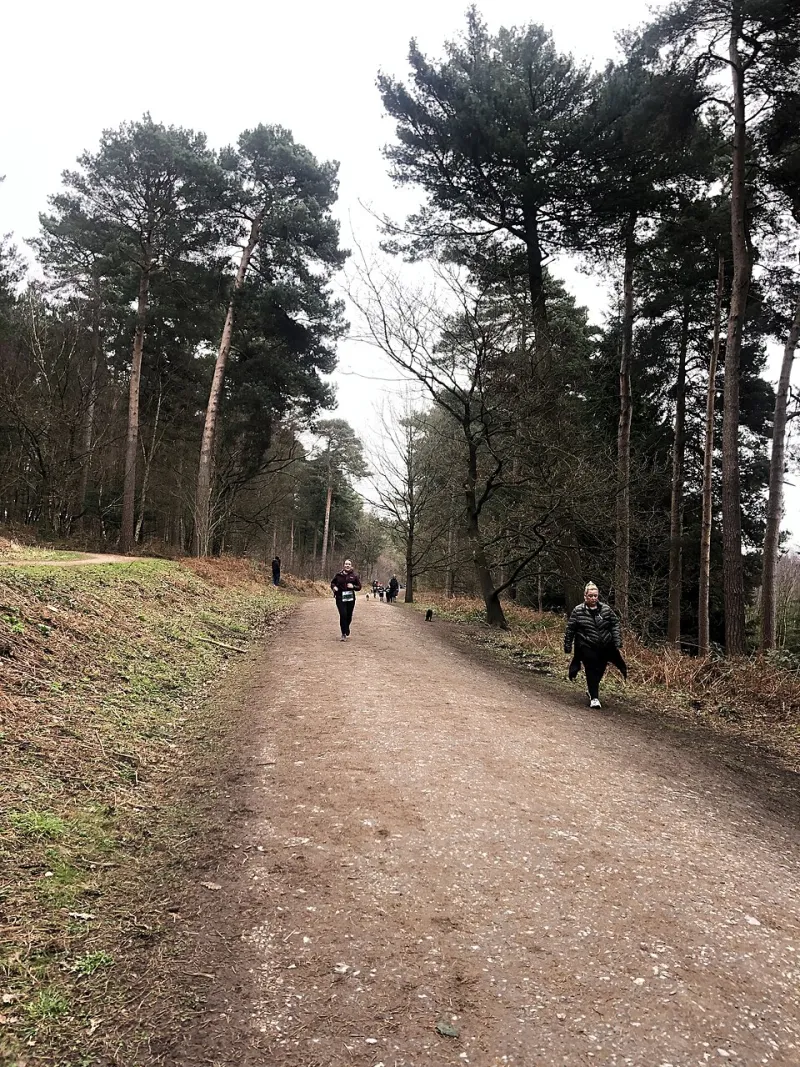
Photo: Eirian Evans , CC BY-SA 2.0, via Wikimedia Commons
There's a moment that happens on Pre's Trail almost every Saturday morning. A visitor from somewhere flat and fast — Texas, maybe, or the Chicago suburbs — rounds the wood-chipped bend along the Willamette, spots a pack of runners moving like a metronome through the fog, and quietly recalibrates their entire understanding of the sport.
That's the thing about Oregon running. You don't just visit it. You get absorbed by it.
The Accidental Capital
Nothing about geography says Eugene, Oregon should be the beating heart of American distance running. It's a mid-sized city in a mid-sized state, tucked against the Coast Range, closer to timber country than to any international border. And yet when USA Track & Field needed a home for its Hall of Fame, it went to Eugene. When the Olympic Trials come to town, they call it what everyone else calls it: TrackTown USA.
The origin story runs through Bill Bowerman, the University of Oregon coach who treated distance running not as filler between football seasons but as a craft worth obsessing over. Bowerman's genius was partly technical — his training logs, his insistence on rest, his waffle-iron experiment that birthed a shoe empire — but mostly it was cultural. He made running matter in a place where it had never mattered before.
His most famous pupil made it immortal.
The Ghost on the Trail
Steve Prefontaine never won an Olympic medal. He never broke a world record on the track that still bears his name. And it doesn't matter, because what Pre left behind was bigger than hardware: the conviction that American runners should go to the front and stay there, that holding back was a kind of surrender.
He died at 24, behind the wheel of a Maserati on a hillside road in Eugene, and the town has never really let him go. There's the rock where the crash happened, still covered in race bibs and dog-eared notes. There's Pre's Trail, the soft-surface loop Bowerman built after watching Pre lose a rugged cross-country race in Munich and deciding his runners deserved something gentler on the legs. There's the ritual every July at Hayward Field, where thousands line up to run a mile in his honor — some of them serious racers, many of them just people who heard the story once and felt something.
Every sport has shrines. Few have one you can jog past on your lunch break.
When a Shoe Company Built a Village
Here's the part of the story outsiders miss: the legend alone doesn't sustain a running culture for fifty years. Infrastructure does.
Nike grew out of Bowerman's garage-adjacent tinkering and never really left. The company's Beaverton campus became a de facto national training center, and the Oregon Project era — whatever its complicated legacy — pulled elite talent from around the world into the Portland metro area. Around that nucleus grew something less corporate and more interesting: a dense web of coaching groups, specialty running shops, physio studios, and community clubs that make the Portland-Eugene corridor arguably the deepest talent pool per capita in the country.
Runners don't move here for the weather. Trust me on that. They move here because if you're a 2:19 marathoner with a big dream, this is where your coach lives, where your physio works, where your sponsors train, and where the guy ahead of you at the coffee shop is probably a former NCAA champion who'll offer you a ride to the trailhead anyway.
The Courses That Made the Culture
Ask anyone who raced in Oregon about the courses and watch them get misty. There's the Eugene Marathon, which finishes inside Hayward's walls. There's the Hood to Coast relay, a 200-mile overnight odyssey from the top of a volcano to the Pacific that sells out in minutes and turns grown adults into sleep-deprived van-dwellers arguing about pacing math at 3 a.m.
And there's the high school layer, which might be the most important part. Oregon's prep track and cross-country scenes are treated with genuine civic seriousness — championship meets draw crowds, courses like the one at Lane Community College are maintained with golf-course pride. Kids grow up here thinking running fast in shorts is a perfectly normal thing to be celebrated for. That normalization is the whole ballgame.
Why the Pilgrims Keep Coming
Every October, runners from all fifty states book flights to Portland, rent vans, and subject themselves to Hood to Coast. Every spring, qualifier-hopefuls chase times in Eugene's forgiving spring air. Every summer, campers at local running camps get the full sermon: the trail, the rock, the track.
They come because Oregon running offers something the sport has been losing everywhere else — a sense of place. In an era when you can run a virtual marathon anywhere and train off an app written in Silicon Valley, Oregon insists that running belongs somewhere specific. That it has history you can touch, heroes with names on the streets, and a community that will nod at you on the trail whether you're running a 4-minute mile or a 12-minute one.
The rest of the country built running programs. Oregon built a running identity. You can feel the difference under your feet, one wood-chip mile at a time.


